
Overview
When you use new IPs and/or domains, they don’t have a previous sending history. Because of this, mail- box providers like Gmail, Yahoo, and more don’t know what to expect.
A common practice for spammers is to move from IP to IP or domain to domain without warming them up. This is known as IP/domain hopping, and mailbox providers have taken measures to thwart this technique. These providers will throttle (temporarily defer) or, even worse, totally block messages from IPs and/or new domains they haven’t seen before. They will do this until they trust that the messages coming from an IP/domain are legitimate. Mailbox providers may also filter messages and place them in junk to see how their users interact with the message – and more importantly to see if they will mark the message as not junk.
So, don’t be worried if you see some messages get filtered as spam on your new IP/domain – it’s to be expected. Below are some simple steps that you can take to make sure you establish a great reputation with your new IP.
Build a Sound Infrastructure
Tenon helps with this by providing the necessary DNS records (SPF & DKIM) to make sure your messages are authenticated. By making sure you have set up proper DNS records, you are doing your part to authenticate by telling recipient servers the messages are coming from you and not someone else.
Always have MX records setup for the domain you use with Tenon, because some recipient servers will reject your message if the sending domain’s MX records don’t resolve.
Also, have a look at DMARC. Creating this record for all of your sending domains will keep malicious users at bay and prevent them from spoofing your domain.
Purge
Clean your email lists by removing all users that have previously complained, unsubscribed, or hard bounced.
We also strongly recommend you remove inactive users from your lists while warming up. It’s important that you get the most engagement possible when warming up an IP, and inactive recipients will only reduce those metrics.
You don’t have to discard those inactive users completely, because you can work on a re‐engagement campaign later on.
Target
We recommend targeting your most engaged users first. This will lead to the quickest and most effective warm up.
Your engaged users have proven that they want the messages they are receiving. When a mailbox provider sees this, they know the IP can be trusted.
Start Slowly
We’ve provided a warm up plan on the next page. You don’t have to follow this exactly, but the more you follow it, the better your results will be.
We recommend being as conservative as possible so, if you want to go slower, have at it.
However, if you start out too fast, mailbox providers will undoubtedly filter your messages more aggressively and you’ll be setting yourself up for problems down the road.
Stay Consistent
Don’t be tempted to play catch‐up if you miss a day. Mailbox providers don’t like spikes in volume.
If you miss a day in the schedule, start back where you left off instead of doubling up.
Don't Be Greedy
Regardless of the number of IPs you have assigned, stick to this schedule. If you have 2 or more IPs, this doesn’t mean you can start with 1,000 messages on day one, for example.
Remember, you are building the reputation of your domain as well. And mailbox providers don’t just filter based on IPs, but also domains.
Have Patience
While this does take time, try to be patient.
Skipping this crucial step may lead you into delivery and deliverability issues that are difficult to fix.
Conservative IP Warming Schedule
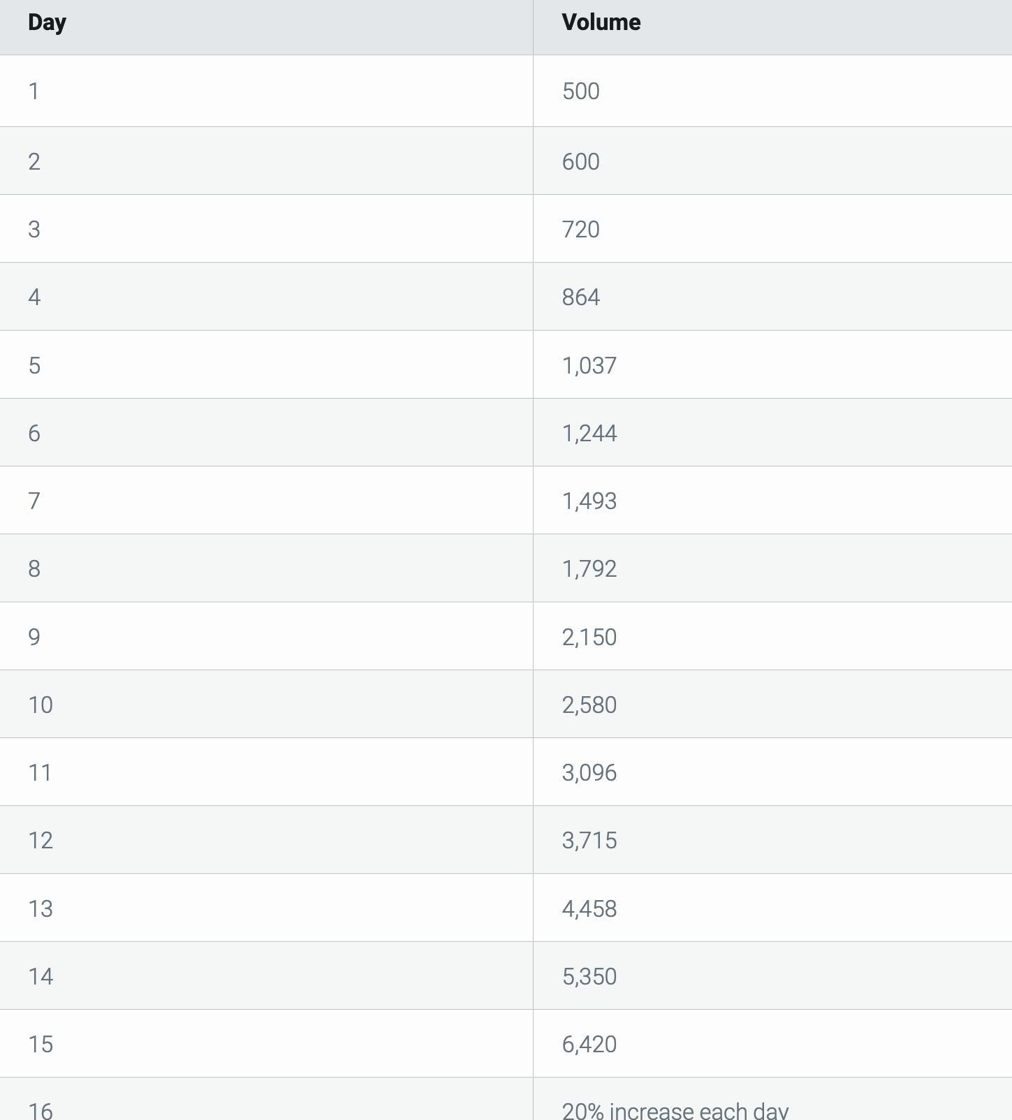
Tip: This Conservative schedule can vary based on many factors like reputation, list hygiene, and user engagement. If you are seeing errors, you should stop increasing volume and revisit your email practices.
This schedule is best used when you are moving to a new sending IP and domain that have never helped reputation before. There are ESPs that will share IP and domain reputation between all their users so, to the world, you will seem like a brand new sender. If you are unsure if your ESP does this, reach out to your Deliverability Services resource and they can help you decide if this schedule is right for you.
Aggressive IP Warming Schedule
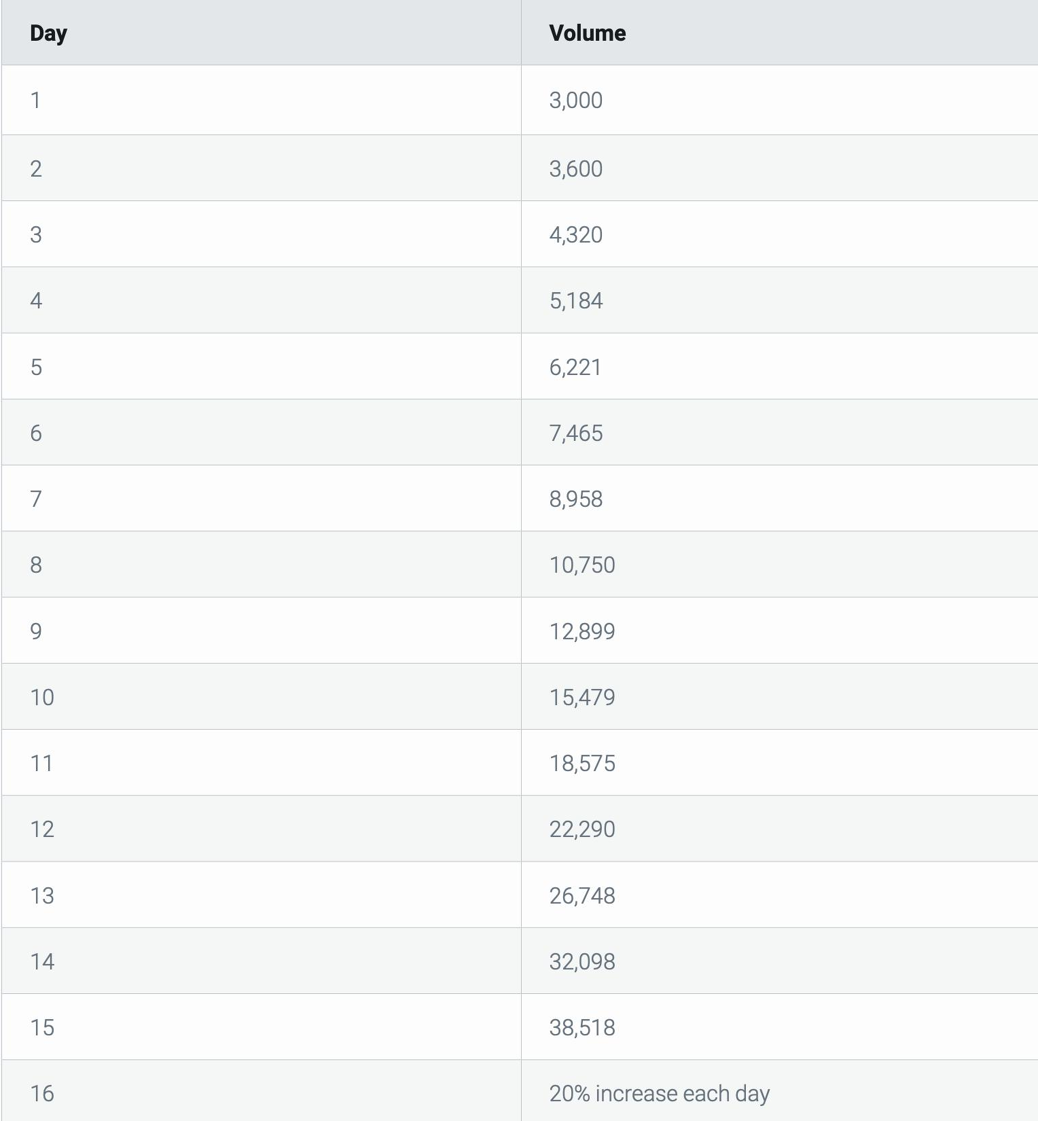
Tip: This Aggressive schedule can vary based on many factors like reputation, list hygiene, and user engagement. If you are seeing errors, you should stop increasing volume and revisit your email practices.
In many instances, you will have been sending from a pre-existing domain that you are just moving over to a new location with new IPs. If that is the case, then this warm up plan should work for you. This creates an aggressive curve for volume, but with an established domain and content reputation, it will just be a matter of making sure that your IPs are seen by ISPs before you start sending in high volumes.
Most Aggressive IP Warming Schedule
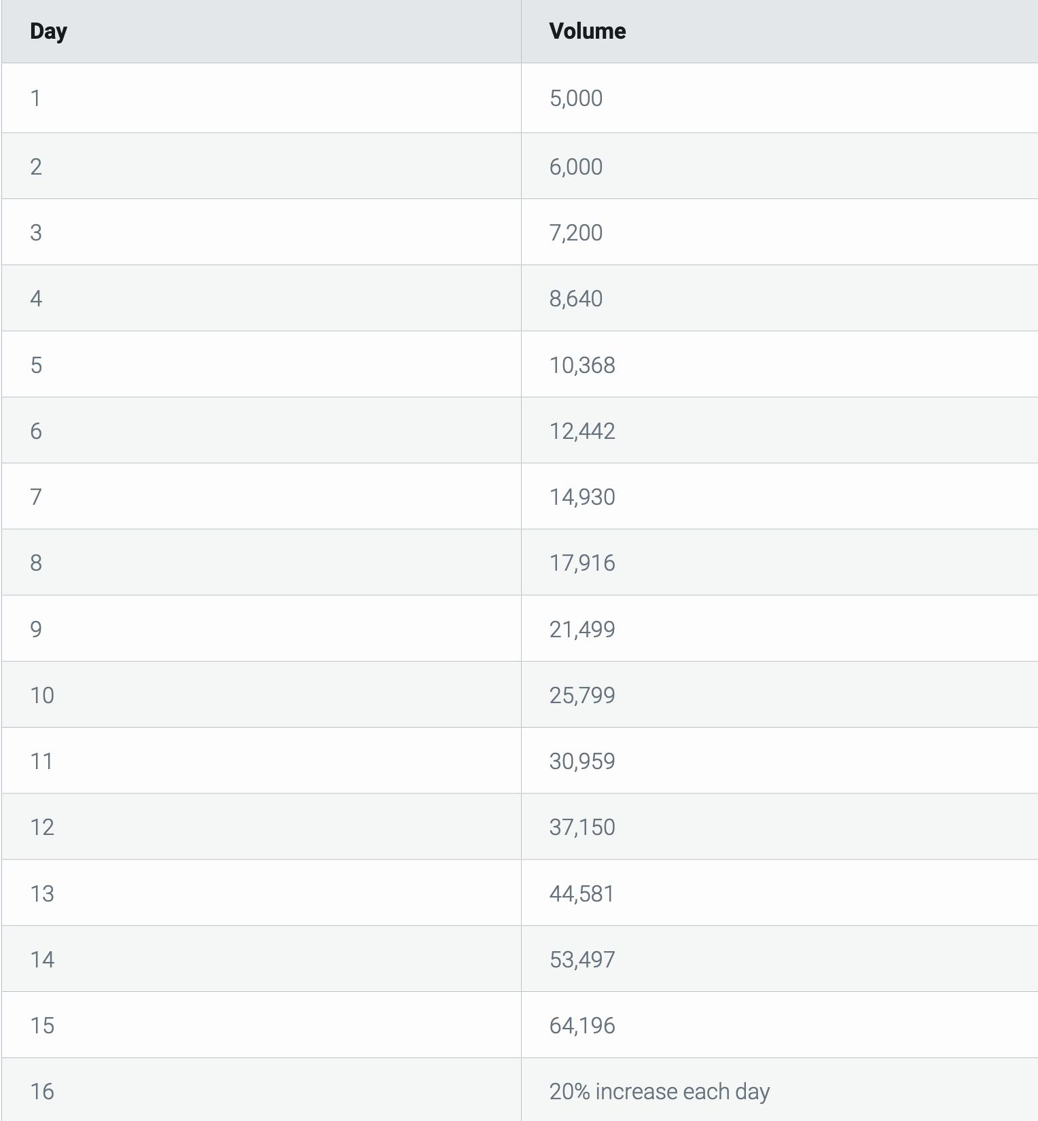
Tip: This Very Aggressive schedule can vary based on many factors like reputation, list hygiene, and user engagement. If you are seeing errors, you should stop increasing and revisit your email practices.
Senders that need to start ramping volume quickly can use this as an option. This will always work best with a previously established domain and content reputation, very engaged recipients, and well-documented proof of their engagement. This also creates the highest risk factor for completing a warm up because more attention will have to be given to any failures that happen.